


Prof. Micha Ilan’s Lab, School of Zoology, Tel Aviv University
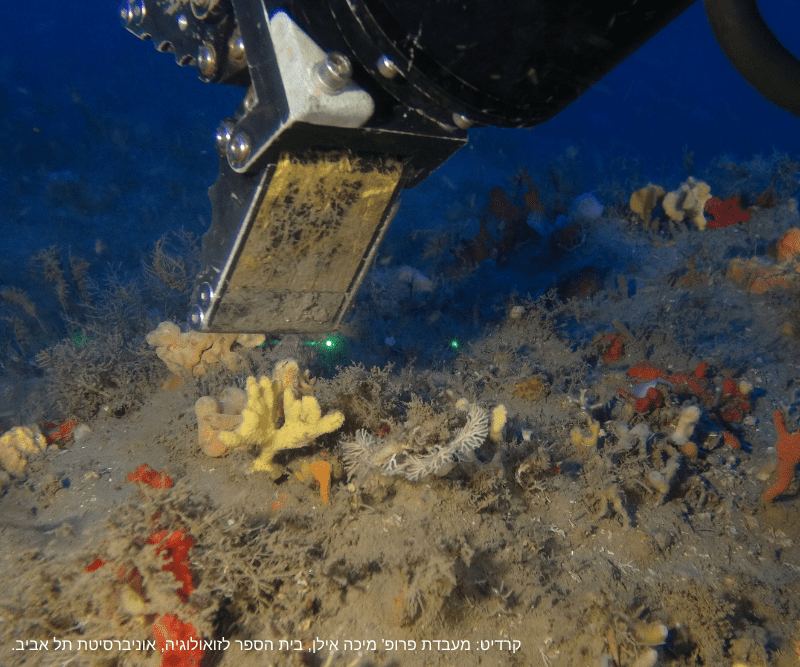
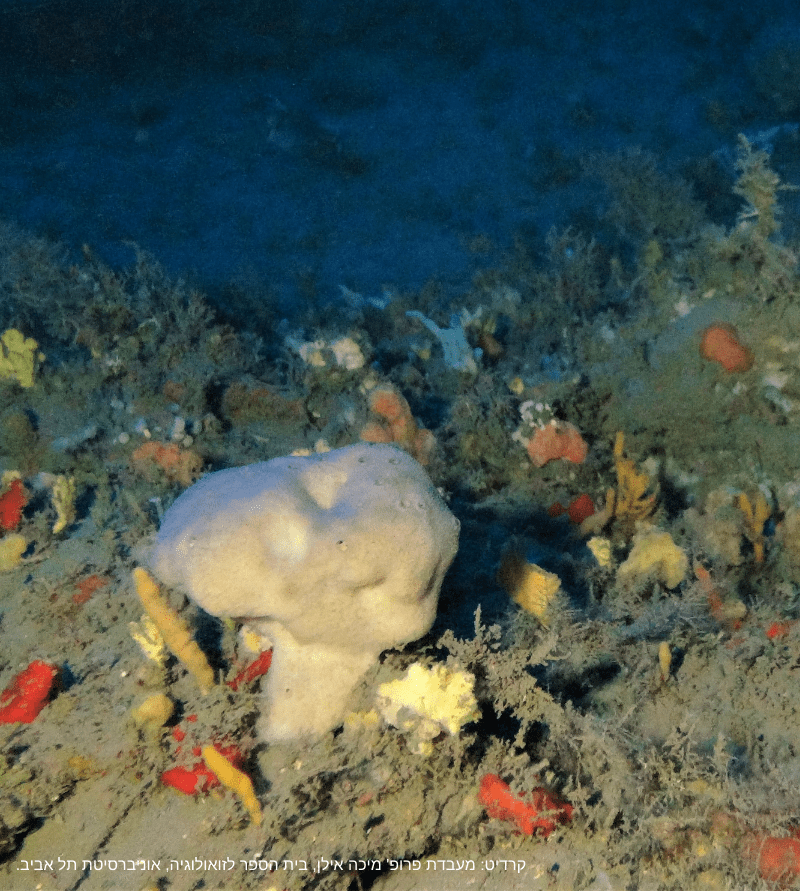
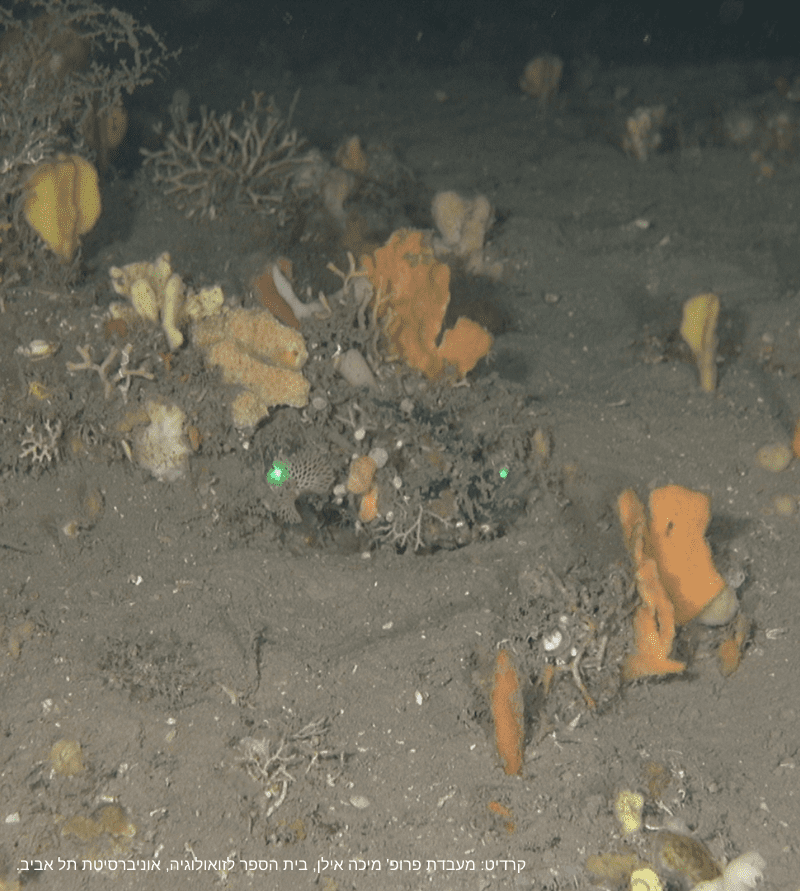
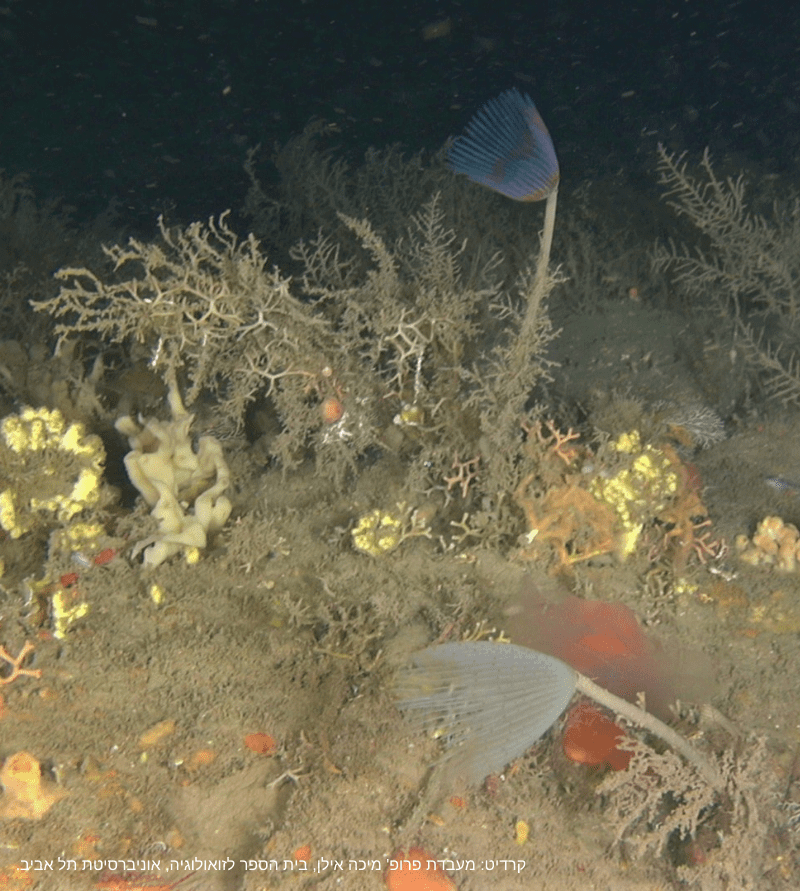
On April 3–4, 2023, we set out for a two-days trip at sea off the coast of Atlit, as part of a research project focused on the sponge gardens found about 100 meters deep in the Mediterranean Sea. These sponge gardens lie within the proposed boundaries of the Atlit Sea Marine Nature Reserve, consisting of numerous underwater ridges that are part of a eolianite (calcareous sandstone) reef in the mesophotic zone (depth range is around 30–150 meters). On the first day of the research excursion, we surveyed a ridge north of the reserve that had never been studied before, a moment of real excitement, similar to discovering a new world. Joining us on this survey were staff from the Israel Nature and Parks Authority (the Mediterranean Ecology Coordinator and the Northern Marine Rangers), as the research is carried out under their funding as part of efforts to advance the establishment of marine nature reserves. Like many other ridges we have surveyed in the past, this one turned out to be an exceptionally rich and diverse habitat, with sponges as the most common animals. Sponges are among the oldest animal life forms on Earth. They are anchored to the seafloor and filter large volumes of water, removing bacteria, viruses, and organic particles, which serve as their food. Structurally, sponges are very simple, made up of numerous chambers and canals. They form three-dimensional structures that provide habitats for diverse creatures living within, on, or among them. These include corals, starfish, snails, octopuses, worms, tunicates, and of course, fish. Unfortunately, we also witnessed clear evidence of human activity in the area, such as fishing gear and marine debris damaging the habitat, as well as a discarded rifle cartridge.
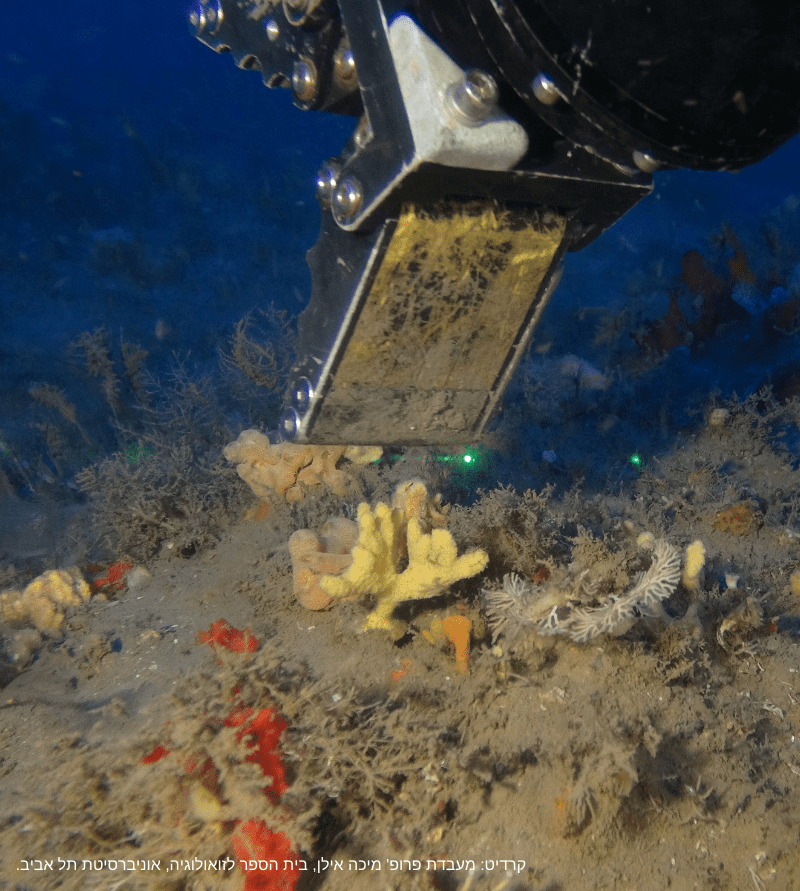
Our goal on the second day of the excursion was to collect samples from a specific sponge species to study the genetic and ecological connectivity between sponge populations in different mesophotic sponge gardens along Israel’s coastline and those living in shallow habitats (up to 30 meters’ deep). Measuring connectivity is critical: high connectivity indicates the exchange of reproductive material and genetic mixing, both of which are essential for preserving biodiversity and increasing the chances of recovery and resilience in habitats threatened by natural or human impacts, including global warming. To our delight, we were accompanied by two common bottlenose dolphins on the way to the research site and were surprised by a rare visit from a leatherback sea turtle, an especially uncommon guest along Israel’s Mediterranean coast and considered an endangered species.